
Game Strategy Mastery: Complete Guide for Dominating Any Game Genre
Battle Royale Strategy Game StrategyMastering Game Strategy involves much more than quick reflexes. It’s a sophisticated blend of deep game mechanics knowledge, meta-game analysis, and psychological tactics applied across countless gaming universes. From the chess-like precision of turn-based strategy games to the split-second decision-making of real-time battles, a winning approach requires understanding fundamental principles that transcend individual titles. This comprehensive guide breaks down the core components of successful game strategy to help you build a formidable competitive mindset, analyze game states effectively, and execute plans that lead to consistent victory.
The journey to game strategy mastery begins with recognizing that strategy exists on multiple interconnected levels. At the most basic level, strategy involves optimal resource management and unit or character control. The next level considers the broader meta-game—the prevailing trends and popular tactics within the competitive community. The highest strategic level involves mind games and adaptation, anticipating your opponent’s plans and countering them before they fully develop. True strategic dominance is achieved when you can fluidly operate across all these levels, whether you’re commanding armies in a grand strategy title, outmaneuvering foes in a MOBA, or optimizing your city in a simulation game.
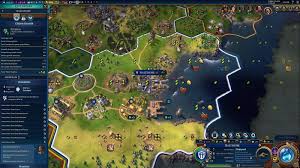
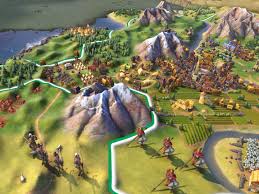
Understanding the different genres of strategy games is crucial as each requires a tailored mindset. Real-Time Strategy (RTS) games like StarCraft demand rapid multitasking and economic efficiency. Turn-Based Strategy (TBS) games, such as Civilization or XCOM, reward deep calculation and long-term planning. Multiplayer Online Battle Arenas (MOBAs) like Dota 2 or League of Legends emphasize team composition, map control, and objective timing. Meanwhile, grand strategy games (e.g., Europa Universalis) challenge players with complex diplomatic and logistical systems. Despite their differences, all strategic genres share common pillars: information control, resource advantage, tactical positioning, and psychological pressure. This guide will explore these universal principles while providing genre-specific insights to sharpen your game strategy for any virtual battlefield.
The Core Principles of Game Strategy
Understanding and Controlling Game Resources
The foundation of nearly every winning game strategy is superior resource management. Resources are the engine of your progress, whether they are gold and lumber in Warcraft, mana and cards in Hearthstone, or time and attention in a fast-paced shooter. A fundamental strategic principle is to always be generating value; idle resources are a liability. This means continuously producing workers, spending your in-game currency, and ensuring your production facilities are never dormant. Top players optimize their “build order”—the sequence of early-game actions—to accelerate their resource income, often sacrificing short-term safety for a significant long-term economic advantage.
Efficient resource management extends beyond mere collection to intelligent allocation. This involves making calculated trade-offs: Do you invest in army strength now for map control, or in technology for a more powerful late-game force? Do you spend your card-playing resource on a minion this turn, or save it for a more impactful spell later? Master strategists plan their resource expenditure several steps ahead, anticipating future costs and ensuring they have the necessary funds available at critical moments. This forward-thinking approach prevents the common pitfall of being “resource rich but cash poor” at a decisive juncture. Tools like in-game graphs can be studied to compare your resource flow against an opponent’s, providing vital intelligence on their strategic focus.
Finally, resource strategy includes denying resources to your opponent—a concept known as harassment in game strategy. In RTS games, this might involve raiding worker lines. In MOBAs, it involves zoning an enemy away from experience-giving minions (“creep wave”). In collectible card games, it involves destroying your opponent’s “mana ramps” or key cards that generate advantage. By actively stifling your opponent’s economy, you create a relative advantage for yourself even if your own income remains static. This dual focus on growing your own strength while limiting your opponent’s is the hallmark of an aggressive and controlling game strategy.
The Critical Role of Information and Scouting
In the realm of competitive game strategy, information is power. You cannot make effective decisions if you are operating in the dark. Scouting—the active gathering of intelligence on your opponent’s actions, location, and composition—is therefore a non-negotiable skill. The early game in strategic titles is often a race to conceal your own plans while uncovering your opponent’s. Failing to scout typically leads to being surprised by a specialized counter-strategy or a massive attack you are unprepared to defend.
Different games offer different scouting tools. In RTS games, this involves sending inexpensive scout units across the map. In card games, it involves tracking which cards have been played from your opponent’s deck or hand. In team-based shooters or MOBAs, it involves maintaining “vision” or “map awareness” through wards, drones, or simply paying attention to minimaps. A proactive game strategy dedicates resources specifically to information gathering, treating it as an essential line item in your strategic budget, not a luxury. The moment you stop scouting is the moment you become vulnerable.
The highest level of information strategy involves disinformation and mind games. This is where you actively feed your opponent false signals to manipulate their decisions. You might build structures that suggest one type of army while secretly preparing another. You might play a card in a way that implies you lack a specific counter, baiting your opponent into overcommitting. The psychological layer of game strategy turns the match into a battle of wits, where predicting your opponent’s prediction of your own plan becomes key. Mastering this level requires not just game knowledge, but an understanding of human psychology and common patterns of play.
The Art of Tactical Positioning and Engagement
Resources and information set the stage, but battles are won through superior tactical positioning. The principle of “fighting on your terms” is universal. This means engaging the enemy when you have a positional advantage, such as high ground in game strategy, choke points where your enemy’s numerical superiority is nullified, or areas where your specific unit abilities are most effective. A smaller, well-positioned force can consistently defeat a larger, disorganized one. Renowned military strategist Sun Tzu’s adage, “He will win who, prepared himself, waits to take the enemy unprepared,” applies perfectly to virtual battlefields.
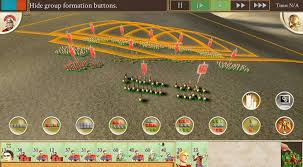
Unit composition and counter-play are central to tactical execution. A sound game strategy involves building an army or team that has a coherent plan and can respond to various threats. This is often described as a “rock-paper-scissors” dynamic: cavalry beat archers, archers beat infantry, infantry beat cavalry. The master strategist not only understands these counters but also manipulates the game state so engagements favor their composition. This might involve using fast units to pick off enemy siege weapons before a main battle or using area-of-effect spells to cluster and destroy swarms of weaker units.
Finally, engagement timing and tempo dictate the rhythm of play. Tempo refers to who is forcing the actions and who is forced to react. The player with tempo is applying pressure, making threats, and controlling the pace of the game. A key strategic goal is to seize tempo and never relinquish it. This can be achieved by making efficient trades, securing key objectives that demand an opponent’s response, or launching multi-pronged attacks that overload their ability to react.
Understanding when to be patient and when to strike decisively is the difference between a good player and a champion. A perfectly timed push or ambush, exploiting a momentary power spike or opponent’s mistake, can end a game instantly, making timing perhaps the most subtle yet powerful weapon in strategic gaming.
Advanced Meta-Game and Psychological Strategy
Analyzing and Adapting to the Meta-Game
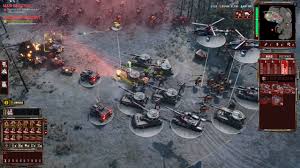
Beyond the mechanics of any single match lies the meta-game, often shortened to “the meta.” This is the evolving ecosystem of popular strategies, character picks, unit compositions, and deck builds within the competitive community at a given time. The meta forms as players discover the most efficient and powerful tactics, and it shifts continuously as new content is released, balance patches are applied, and innovative counter-strategies are developed. A player who ignores the meta is like a navigator using an old map; they might understand the terrain, but they won’t know the fastest or safest current routes to victory.
To master game strategy, you must become a student of the meta. This involves consuming content from top players and analysts, studying tier lists, and understanding why certain strategies are dominant. For example, the meta might favor fast, aggressive (“rush”) strategies because they punish slower, economic-focused builds. In this environment, a savvy strategist might either become proficient in the dominant rush strategy or specialize in a “meta-breaker”—a defensive build specifically designed to counter the popular aggression and win consistently against it. Playing a meta-breaker strategy can be highly effective because most opponents will be practiced against the common meta, not against your tailored counter.
Adapting your personal game strategy to the meta requires flexibility and a deep toolkit. One-trick ponies—players who master only one specific tactic—can climb the ranks until the meta shifts or they are hard-countered. Truly resilient strategists maintain proficiency in multiple styles (aggressive, defensive, economic, sneaky) and can identify which approach has the highest probability of success against the current field of opponents. This adaptive mindset is what allows players to remain at the top across multiple seasons and game updates, constantly learning and refining their approach rather than clinging to a single, potentially obsolete, winning formula.
Psychological Warfare and Predicting Opponents
At the highest levels of competition, where technical skill and game knowledge are often nearly equal, psychological strategy becomes the decisive factor. This involves getting inside your opponent’s head to influence their decisions, induce mistakes, and control the emotional flow of the match. A common tactic is to identify and exploit an opponent’s predictable patterns in game strategy. Many players have habitual responses to common situations—a certain way of retreating, a favored expansion location, a tendency to attack at a specific time. By recognizing these patterns early, you can lay traps and orchestrate situations where their automatic response leads to their downfall.
Tilting your opponent—causing them to become frustrated and emotionally compromised—is a dark but effective art. This isn’t about toxic chat; it’s achieved through in-game actions. A relentless, early harassment that kills key workers can make an opponent feel helpless and angry. Stealing a crucial objective (like “Baron Nashor” in League of Legends) at the last second with a lucky skill shot can be emotionally devastating. The strategic goal is to shift the opponent’s focus from calm calculation to emotional reaction, which invariably leads to poorer decision-making. However, a master strategist must also guard against being tilted themselves, maintaining a level-headed “poker face” regardless of setbacks.
The pinnacle of psychological game strategy is the multi-layered mind game, often described in terms of “reads.” A “read” is a correct prediction of your opponent’s plan. The simplest level is reading what they are currently doing. The next level is reading what they think you are doing. The highest level is reading what they think you think they are doing. This recursive thinking is exemplified in high-level play, where a player might fake a vulnerable expansion (a “feint”) to lure the opponent into an attack, only to have a hidden army ready to counter-ambush the attackers. Winning these mental duels requires empathy, observation, and sometimes controlled randomness to make your own actions truly unpredictable.
Long-Term Planning and Win Condition Focus
A common error in intermediate players is a lack of clear strategic planning. They win battles but lose the war because they are not actively working toward a concrete win condition. Every game has specific victory conditions: destroy the enemy’s main structure, reduce the opponent’s life total to zero, score more points before time runs out, etc. Every action you take should be evaluated through the lens of how it advances you toward your win condition or impedes your opponent from reaching theirs. A tactic that wins a small battle but drains resources needed for your ultimate goal is a strategic misstep in game strategy.
This requires playing to your win condition. If you have a late-game composition that becomes unstoppable after 20 minutes, your entire early-game strategy should be one of survival, economic growth, and mild harassment—not all-in attacks. Conversely, if your strategy peaks in power at the 10-minute mark, you must be aggressive and force engagements before the opponent outscales you. A frequent mistake is trying to do a little of everything, resulting in a force that is not optimized for any particular phase of the game and gets outclassed by a more focused opponent. Your build order, unit choices, and map movements must all be in service of executing your chosen path to victory.
Finally, adaptive long-term planning is essential. While you start with a plan, you must be willing to pivot your game strategy based on new information. Scouting might reveal that your planned late-game tech is hard-countered by what your opponent is building. A successful early raid might give you an economic lead that allows you to win sooner than expected. The mark of a master strategist is the ability to reformulate a long-term plan mid-game without losing cohesion or tempo. This flexibility, guided by a constant focus on the win condition, ensures that you are always making the most efficient possible use of your resources and opportunities, turning small advantages into insurmountable leads and, ultimately, victory.
Strategy Execution and Practical Improvement
Developing a Strategic Training Regimen
Mastering game strategy is not a passive activity; it requires dedicated, focused practice. Simply playing matches on autopilot leads to stagnation. Deliberate practice is the key: isolating specific skills, drilling them repeatedly, and analyzing performance with intent. Start by identifying your biggest strategic weakness. Is it your shaky early-game build order? Your poor engagement positioning in team fights? Your inability to manage the economy while attacking? Once identified, create custom drills to target that weakness specifically, outside the pressure of a ranked match.
A highly effective training method is VOD (Video on Demand) review. Record your matches, especially your losses. When reviewing, watch with a critical, analytical eye. Pause at key decision points and ask strategic questions: “Why did I move my army here? What information did I have? What was my opponent likely doing? Was there a more optimal resource allocation?” Compare your replay to a VOD of a top-tier player in a similar situation. Note the differences in their pathing, timing, scouting patterns, and decision-making logic. This analytical process transforms raw experience into deep, actionable strategic knowledge. Many professional gamers spend as much time reviewing VODs as they do playing.
Furthermore, integrate theorycrafting into your game strategy development. Theorycrafting is the mathematical analysis of game mechanics outside of play. Use community tools, spreadsheets, or even simple calculations to answer strategic questions: “Which item gives more damage per gold for my character?” “What is the exact fastest possible timing for a specific attack?” “How much health does a unit need to survive a specific spell combo?” Grounding your strategic choices in data removes guesswork and builds confidence. By combining deliberate practice, analytical review, and theoretical knowledge, you construct a robust framework for continuous strategic improvement, ensuring you are always learning and evolving as a player.
Utilizing Technology and Community Resources
The modern strategist does not operate in a vacuum. A vast array of technology aids for game strategy exists to accelerate your learning curve. Start with in-game tools: most competitive titles now offer detailed post-match statistics, heat maps of activity, and timeline breakdowns of resource and army values. These provide an objective foundation for analysis. Beyond the game itself, leverage external platforms. Websites like op.gg, Dotabuff, or hsreplay.net aggregate millions of matches to show win rates, popular builds, and meta trends for specific heroes, commanders, or decks. This data is invaluable for informing your own strategic choices.
The gaming community itself is a strategic resource. Engage with it intelligently. Follow top players and analysts on streaming platforms like Twitch; don’t just watch for entertainment, but listen to their commentary and ask questions about their decision-making. Participate in dedicated Discord servers or subreddits for your game. These forums are where new strategies are debated, matchups are discussed, and complex questions are answered by experienced players. However, practice critical thinking—not all community advice is good. Test suggested strategies yourself and adopt what works for your playstyle.
Finally, consider specialized software to sharpen your game strategy. Applications exist for training “micro” (unit control) in RTS games through custom scenarios. Deck trackers in digital card games help you calculate probabilities and remember which cards remain in your deck. Even simple tools like a metronome app can help you practice maintaining a consistent actions-per-minute (APM) rhythm. The goal is to use technology to externalize and improve aspects of your strategic process, freeing up mental bandwidth for higher-level decision-making during actual competition. Embracing these resources is the hallmark of a serious, modern strategic competitor.
Building and Leading a Strategic Team
For team-based strategy games (MOBAs, team shooters, MMORPG PvP), individual game strategy must evolve into coordinated team strategy. This introduces a new layer of complexity: communication, role specialization, and collective decision-making. A team of five superstar individuals with no coordination will consistently lose to a less skilled but well-organized team. Therefore, your strategic development must include teamplay fundamentals. Establish clear, concise communication protocols. Use standardized callouts for map locations, enemy spells used (“ultimate down”), and strategic intentions (“pushing bottom lane, need vision”).
Role specialization and team composition are critical strategic choices made before a match even begins. Ensure your team covers all necessary functions: initiation (starting fights), damage output, crowd control, and support/healing. Each player must deeply understand not only their own role but how it synergizes with their teammates’. For example, a team composition built around “wombo-combo” (chaining multiple area-of-effect abilities together) requires perfect timing and communication to execute, whereas a “poke and siege” composition requires discipline and patience. Your team’s overarching game strategy should be built around your collective strengths and preferred composition.
Ultimately, team strategy requires a shared strategic vision and a leader. This doesn’t mean one person dictates orders, but rather that the team agrees on a primary win condition and game plan (e.g., “protect our hyper-carry marksman until late game”). During the match, shot-calling—making real-time strategic decisions about when to fight, take objectives, or retreat—should be clear.
Often, this falls to the player in the support or jungle role, as they have more bandwidth to observe the overall map state. Trust, constructive post-match review, and a shared commitment to improving collective macro-play are the pillars upon which championship-level team game strategy is built. By elevating your strategic thinking from the individual to the collective, you unlock a more profound and rewarding dimension of competitive play.
The Future and Evolution of Game Strategy
The landscape of game strategy is not static; it is perpetually evolving alongside technology, game design, and player innovation. One of the most significant current influences is the rise of artificial intelligence and machine learning. AI opponents and training partners, like AlphaStar for StarCraft II, have demonstrated strategies and micro-control previously thought impossible or highly unconventional by humans. Studying AI gameplay can reveal novel unit interactions, hyper-efficient build orders, and unorthodox tactical approaches that can be integrated into human game strategy. Furthermore, AI-powered analytical tools are becoming available to amateur players, offering personalized coaching, identifying strategic leaks in their play, and simulating matchup outcomes.
Another evolutionary trend is the increasing depth of data-driven strategy. Esports organizations now employ full-time data analysts who mine thousands of hours of gameplay to find statistical edges—optimal ward placements with the highest detection rates, precise timings for jungle camp respawns that sync with objective spawns, or hero pick combinations with hidden synergy. This professional-level analysis eventually trickles down into the public meta, raising the overall strategic sophistication of the player base. The strategist of the future will need to be comfortable interacting with and interpreting complex datasets to stay competitive.
Finally, game strategy will continue to be shaped by the games themselves. New genres will emerge, blending elements of RTS, MOBA, and survival games, demanding new hybrid strategic mindsets. Virtual and augmented reality will introduce spatial strategy in three dimensions. However, the timeless principles outlined in this guide—resource mastery, information control, tactical positioning, psychological insight, and adaptive planning—will remain the bedrock of competitive success. By internalizing these fundamentals while staying agile and open to new learning methods, you equip yourself not just to master today’s games, but to conquer the strategic challenges of tomorrow’s virtual worlds. The journey to game strategy mastery is endless, and that is precisely what makes it perpetually engaging.
Key Takeaways for Mastering Game Strategy
- Foundational Pillars: Success rests on superior resource management, relentless information gathering (scouting), and intelligent tactical positioning. Neglecting any one pillar creates a fatal weakness in your strategic framework.
- Think in Layers: Move beyond basic mechanics to master the meta-game and the psychological duel. Winning requires adapting to the community’s trends and out-thinking your opponent on a mental level.
- Plan to Win: Every action should service a clear win condition. Develop flexible long-term plans and be prepared to strategically pivot when new information or opportunities arise, but always with the end goal in sight.
- Practice with Purpose: Improvement requires deliberate practice, analytical VOD review, and data-driven theorycrafting. Use community resources and technology not just to play, but to deeply understand and refine your strategic process.
- Evolve or Stagnate: The field of game strategy is continuously advanced by AI, data analytics, and new game designs. Embrace new tools and ideas to keep your strategic approach fresh and effective.
I hope this comprehensive guide provides a strong foundation for you to analyze, practice, and dominate. To further tailor your learning, what specific strategy game genre (like RTS, MOBA, or card games) are you most interested in applying these principles to? Knowing this could help highlight more targeted tactical frameworks.